The ADHD Reading privacy whitepaper explains how a browser reading tool should protect sensitive page content while still helping people read with more focus.
Why a privacy whitepaper matters
The ADHD Reading privacy whitepaper exists because reading tools can touch sensitive moments. A user may open school portals, workplace documents, health pages, financial explainers, private email, legal policies, or personal writing. If a browser extension makes text easier to read, users deserve to know what happens to that text. The ADHD Reading privacy whitepaper treats privacy as part of the product experience, not a footer link, and the ADHD Reading privacy whitepaper should be easy enough for non-technical readers to use.
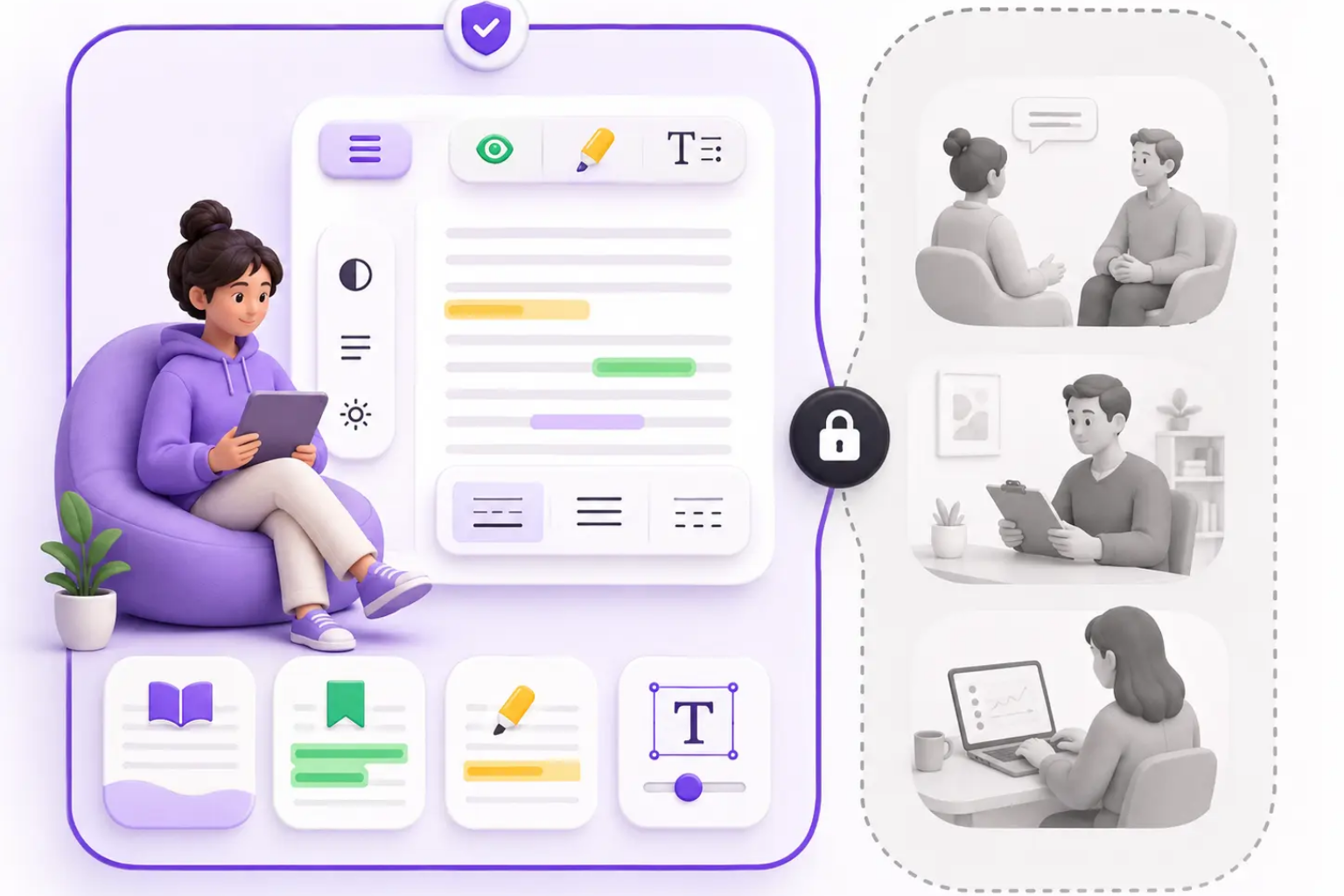
A trustworthy ADHD Reading privacy whitepaper should separate local page access from remote upload. A browser extension may need to inspect visible page text to add bionic cues, semantic highlights, spacing, focus overlays, or reader mode effects. That does not mean full page content should be sent to a server. The ADHD Reading privacy whitepaper makes this distinction clear because users should not have to guess what local-first means.
The guiding principle is simple: routine reading support should happen in the browser whenever possible. The ADHD Reading privacy whitepaper describes that default, explains future exceptions, and gives users practical controls. Privacy should reduce anxiety, not create a new reading task, so the ADHD Reading privacy whitepaper keeps the default model visible and practical.
Sensitive reading contexts
Local access vs upload
Privacy as product UX
Clear user controls
Local-first processing model
The ADHD Reading privacy whitepaper defines local-first processing as the default path for everyday features. Bionic emphasis, semantic keyword highlighting, focus overlays, typography changes, reader mode de-emphasis, themes, timers, and local reading stats can run in the browser. These features should not require uploading full page text just to change how the page looks, and the ADHD Reading privacy whitepaper treats that as a core product rule.
In the ADHD Reading privacy whitepaper, local-first also means settings should stay close to the user. Global preferences, per-site memory, reading themes, presets, and exported settings can live in browser storage. This supports convenience without creating a central database of what people read. If account-based sync arrives later, it should be optional, and the ADHD Reading privacy whitepaper should explain exactly what settings are synced.
Local-first is not a slogan. The ADHD Reading privacy whitepaper uses it as an implementation requirement: do the work on-device when the feature does not need a server, avoid collecting page content by default, and explain any feature that changes that flow before the user enables it.
Browser-side formatting
Local settings
Optional sync only
No default page upload
Extension permissions and page access
The ADHD Reading privacy whitepaper also explains why a reading extension needs page access. A tool cannot highlight words, adjust paragraphs, dim sidebars, or estimate local reading stats without interacting with the current page. Permission language should tell users what access is for, what it is not for, and how to turn the extension off when a page feels sensitive. The ADHD Reading privacy whitepaper makes that permission boundary explicit.
A practical ADHD Reading privacy whitepaper should say that page access is used for visible reading support: text styling, focus effects, reader mode adjustments, local timer overlays, and local estimates. It should also say that permission to read a page is not permission to sell page content, train a model, or upload private documents without a separate, visible user action.
Users should have escape paths. The ADHD Reading privacy whitepaper supports a site toggle, panic-off shortcut, reset settings, export/import, and local data deletion. These controls matter because privacy is partly about reversibility. A user should always be able to stop the tool and return to the original page, and the ADHD Reading privacy whitepaper treats that reversibility as a trust requirement.
Explain page access
Limit purpose
Panic-off path
Reset and delete controls
Data flow and storage boundaries
The ADHD Reading privacy whitepaper describes a simple data flow. The current webpage stays in the browser. The content script reads visible page text for formatting and local estimates. Settings are stored in local browser storage. The popup sends commands to the current tab. The site may provide documentation, support, and legal pages, but routine reading assistance does not need full page text to leave the device.
This boundary is especially important for workplaces and schools. The ADHD Reading privacy whitepaper should help users explain the product to IT reviewers, teachers, parents, or compliance teams. A clear data flow makes it easier to understand which data is page content, which data is settings, which data is support communication, and which data might eventually be billing or account information.
Support messages are a separate boundary. The ADHD Reading privacy whitepaper should advise users not to paste confidential page text into support emails. A useful bug report can describe the browser, site type, reading mode, and layout problem without exposing private content. Support should help solve the issue without normalizing oversharing, which is why the ADHD Reading privacy whitepaper separates support communication from routine page processing.
Page stays local
Settings in browser storage
Support is separate
Clear reviewer language
Optional AI and future cloud features
The ADHD Reading privacy whitepaper should be honest about future AI. AI summaries, action extraction, translation, or advanced semantic analysis may require sending selected text to a service. If those features are added, they should be optional, off by default where appropriate, and clearly labeled before text leaves the browser. A future AI feature should never be hidden inside a routine formatting toggle.
A strong ADHD Reading privacy whitepaper should require just-in-time disclosure. Before upload, users should see what kind of text is sent, why it is needed, whether the action is optional, and how to avoid it. The product should also support local alternatives when possible, such as rule-based highlights, local timers, local themes, and local checklist workflows.
This approach lets ADHD Reading grow without breaking trust, and the ADHD Reading privacy whitepaper should be updated when any cloud feature changes the data flow. The ADHD Reading privacy whitepaper does not promise that no cloud feature will ever exist. It promises that routine reading help stays local by default and that any cloud or AI feature must earn explicit user understanding.
Optional AI
Visible upload moments
Local alternatives
No hidden cloud behavior
User rights, deletion, and support
The ADHD Reading privacy whitepaper gives users a practical support path. Questions about permissions, privacy, deletion, billing, or compatibility can go to support@adhd-reading.com. Users should avoid sending confidential page content unless absolutely necessary. The safest support request describes the page type, browser, mode, and issue.
Users should be able to export, import, and reset local settings. The ADHD Reading privacy whitepaper treats export and reset as practical privacy controls, not advanced features. The ADHD Reading privacy whitepaper treats these controls as privacy features because they reduce lock-in and make local data visible. If future account features store billing or sync data, account deletion and data access workflows should be documented clearly.
The ADHD Reading privacy whitepaper is not a legal trick. It is a product promise: reading support should be calm, reversible, understandable, and privacy-first. The tool is not medical treatment and does not diagnose ADHD, and the ADHD Reading privacy whitepaper keeps that limitation clear. It is an assistive reading environment that should protect user trust as carefully as it protects focus.
Support email
No confidential text by default
Export/import/reset
Future account deletion
Frequently asked questions
Privacy Whitepaper FAQ
What is the ADHD Reading privacy whitepaper?
It is a plain-language explanation of how ADHD Reading should handle page content, permissions, local settings, optional AI, deletion, and support.
Does ADHD Reading upload what I read?
Routine reading support should happen locally in the browser. Any future cloud or AI feature should be optional, visible, and clearly explained.
Why does a reading extension need page access?
It needs access to visible page structure so it can apply text formatting, focus overlays, reader mode effects, and local reading estimates.
How can users ask privacy questions?
Users can contact support@adhd-reading.com and should avoid sending confidential page text unless it is necessary for troubleshooting.