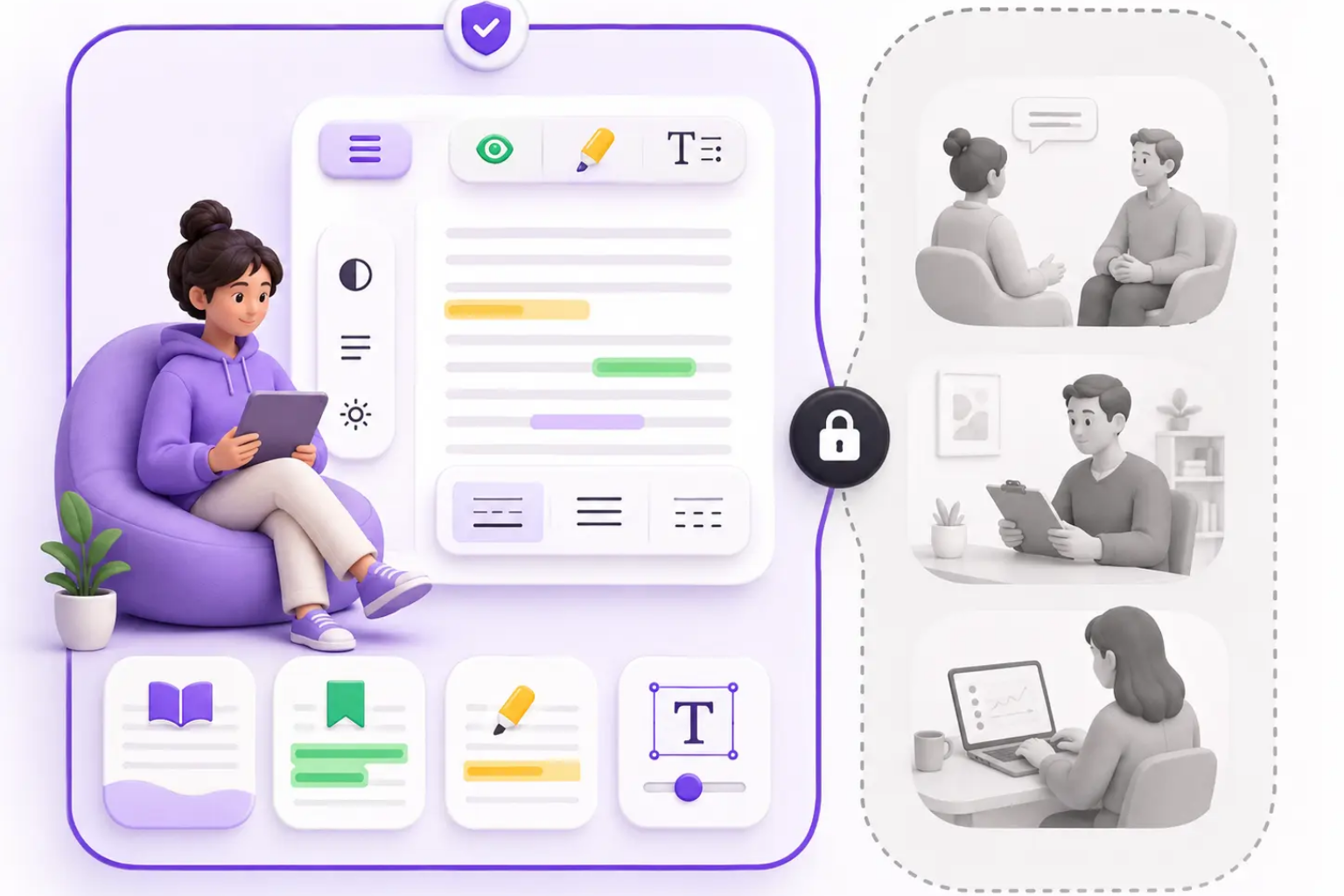
The ADHD Reading medical disclaimer explains that ADHD Reading is an assistive reading and productivity product, not diagnosis, treatment, therapy, or medical advice.
What this disclaimer means
The ADHD Reading medical disclaimer exists because reading support tools can be useful without being medical tools. ADHD Reading may help people create calmer pages, stronger visual anchors, better focus loops, and more recoverable reading sessions. That support can be meaningful, but the ADHD Reading medical disclaimer is clear, and the ADHD Reading medical disclaimer should stay visible across the product: the product does not diagnose ADHD, treat ADHD, cure ADHD, or replace professional care.
A responsible ADHD Reading medical disclaimer matters because users may arrive after searching for ADHD reading problems, attention difficulties, executive dysfunction, study overwhelm, or difficulty finishing articles. Those experiences can be real and frustrating, but software cannot determine whether someone has ADHD or another condition. ADHD Reading can support the reading environment; it cannot evaluate a person’s health, which is why the ADHD Reading medical disclaimer matters.
The ADHD Reading medical disclaimer should appear across product, content, and trust pages whenever health-related language might be misunderstood. The goal is not to make the product less helpful. The goal is to keep the promise accurate: ADHD Reading is practical reading assistance, not clinical advice.
Not diagnosis
Not treatment
Not therapy
Assistive reading support
What ADHD Reading can do
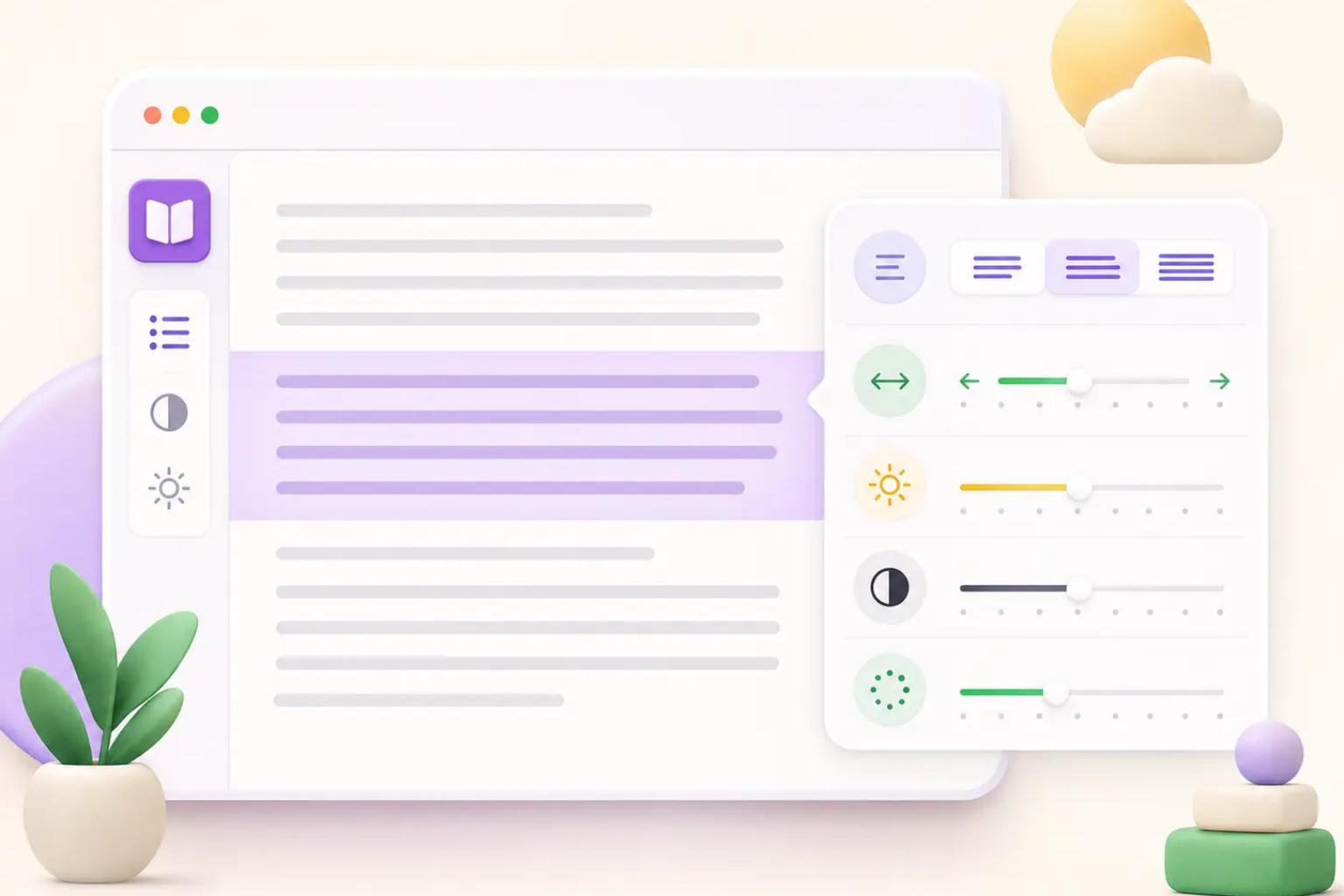
The ADHD Reading medical disclaimer does not mean the product has no value. ADHD Reading can help adjust the reading environment. Bionic cues can create word anchors. Semantic highlights can surface important phrases. Focus overlays can reduce visual noise. Typography controls can make paragraphs more comfortable. Reader mode can de-emphasize distracting page regions. Timers and checklists can make reading sessions feel more bounded.
These features can support people who struggle with dense text, long articles, cluttered websites, low energy, task switching, or returning after distractions. The ADHD Reading medical disclaimer simply frames that support correctly. The product changes the environment and workflow around reading; it does not change a medical condition or guarantee outcomes, and the ADHD Reading medical disclaimer keeps that boundary clear.
This distinction is especially important for students, parents, educators, and workplaces. ADHD Reading can be one practical tool in a broader support plan, and the ADHD Reading medical disclaimer explains that broader context. The ADHD Reading medical disclaimer encourages users to combine software support with appropriate accommodations, professional advice, coaching, tutoring, or clinical care when needed.
Calmer pages
Focus loops
Reading modes
Workflow support
What ADHD Reading cannot do
The ADHD Reading medical disclaimer is explicit about limits. ADHD Reading cannot diagnose ADHD, dyslexia, anxiety, depression, sleep disorders, vision issues, learning disabilities, or any other medical, psychological, or educational condition. If a user is concerned about symptoms, functioning, school performance, work performance, or mental health, they should consult qualified professionals.
ADHD Reading also cannot promise that reading speed, comprehension, grades, productivity, or focus will improve for every user. People respond differently to visual emphasis, highlights, themes, timers, TTS, and reader modes, so the ADHD Reading medical disclaimer avoids universal promises. The ADHD Reading medical disclaimer avoids exaggerated claims because trust is more important than dramatic marketing language.
The product should never present itself as a substitute for medication, therapy, educational accommodations, professional diagnosis, emergency care, or crisis support. The ADHD Reading medical disclaimer keeps that boundary visible so users understand what kind of help the product provides and what kind of help requires a human professional.
No clinical diagnosis
No guaranteed outcomes
No medication replacement
No crisis care
When to seek professional support
The ADHD Reading medical disclaimer encourages professional support when reading difficulty is persistent, distressing, or disruptive. If a person regularly cannot complete schoolwork, struggles at work, experiences severe anxiety around reading, avoids important documents, or feels that attention problems are harming daily life, it may be appropriate to talk with a clinician, school counselor, accessibility office, psychologist, psychiatrist, physician, or qualified educational professional.
Users should also seek support if reading problems appear suddenly, worsen quickly, or come with vision changes, headaches, sleep problems, depression, panic, substance use concerns, or thoughts of self-harm. The ADHD Reading medical disclaimer cannot list every situation, but the ADHD Reading medical disclaimer can state the principle clearly: software should not delay professional help when health or safety is involved.
If someone may be in immediate danger or experiencing a crisis, they should contact local emergency services or a crisis hotline in their country. The ADHD Reading medical disclaimer is not emergency guidance, and ADHD Reading is not monitored as a crisis service.
Persistent distress
School/work disruption
Sudden changes
Emergency help when needed
Content and research boundaries
The ADHD Reading medical disclaimer also applies to educational content on the website. Blog posts, guides, strategy pages, comparison pages, and tool pages may discuss ADHD, reading difficulty, focus, executive function, and study strategies, so the ADHD Reading medical disclaimer applies to content too. That content is for general information and product education. It should not be used as personalized medical, psychological, legal, or educational advice.
If ADHD Reading references research, the site should avoid overstating conclusions. A study may describe trends, associations, or possible mechanisms, but that does not mean a browser tool produces a clinical result. The ADHD Reading medical disclaimer should remind readers that content can explain context without making treatment claims.
The same ADHD Reading medical disclaimer boundary applies to future AI features. If ADHD Reading offers summaries, action extraction, or question answering, AI output should not be treated as medical advice. The ADHD Reading medical disclaimer should remain visible wherever AI might answer questions that touch health, diagnosis, medication, therapy, accommodations, or crisis topics.
General information
No personalized advice
No overclaimed research
AI is not clinical advice
How to contact ADHD Reading
Questions about the ADHD Reading medical disclaimer can go to support@adhd-reading.com. Support can explain product scope, privacy, permissions, compatibility, billing, or account questions, but the ADHD Reading medical disclaimer means support cannot provide medical diagnosis, clinical interpretation, treatment plans, medication advice, or emergency services.
When contacting support, users should avoid sending sensitive medical records, private school records, workplace documents, or confidential page content unless absolutely necessary. The ADHD Reading medical disclaimer works together with the privacy whitepaper: support should solve product questions without asking users to overshare private text.
ADHD Reading aims to be useful, honest, and respectful, and the ADHD Reading medical disclaimer is part of that promise. The ADHD Reading medical disclaimer protects that promise by keeping the product in its proper role: a local-first assistive reading environment that may reduce friction, not a medical provider that evaluates or treats ADHD.
Support email
No medical advice by support
Avoid confidential text
Product scope clarity
Frequently asked questions
Medical Disclaimer FAQ
Is ADHD Reading medical advice?
No. ADHD Reading is an assistive reading and productivity product, not medical advice, diagnosis, treatment, therapy, or emergency support.
Can ADHD Reading diagnose ADHD?
No. Only qualified professionals can evaluate ADHD or other medical, psychological, or educational conditions.
Can ADHD Reading still be useful?
Yes. It can support the reading environment with focus overlays, bionic cues, typography controls, timers, themes, and local workflows, but outcomes vary.
Who should I contact for health concerns?
Contact a qualified medical, mental health, or educational professional. In an emergency, contact local emergency services or a crisis hotline.