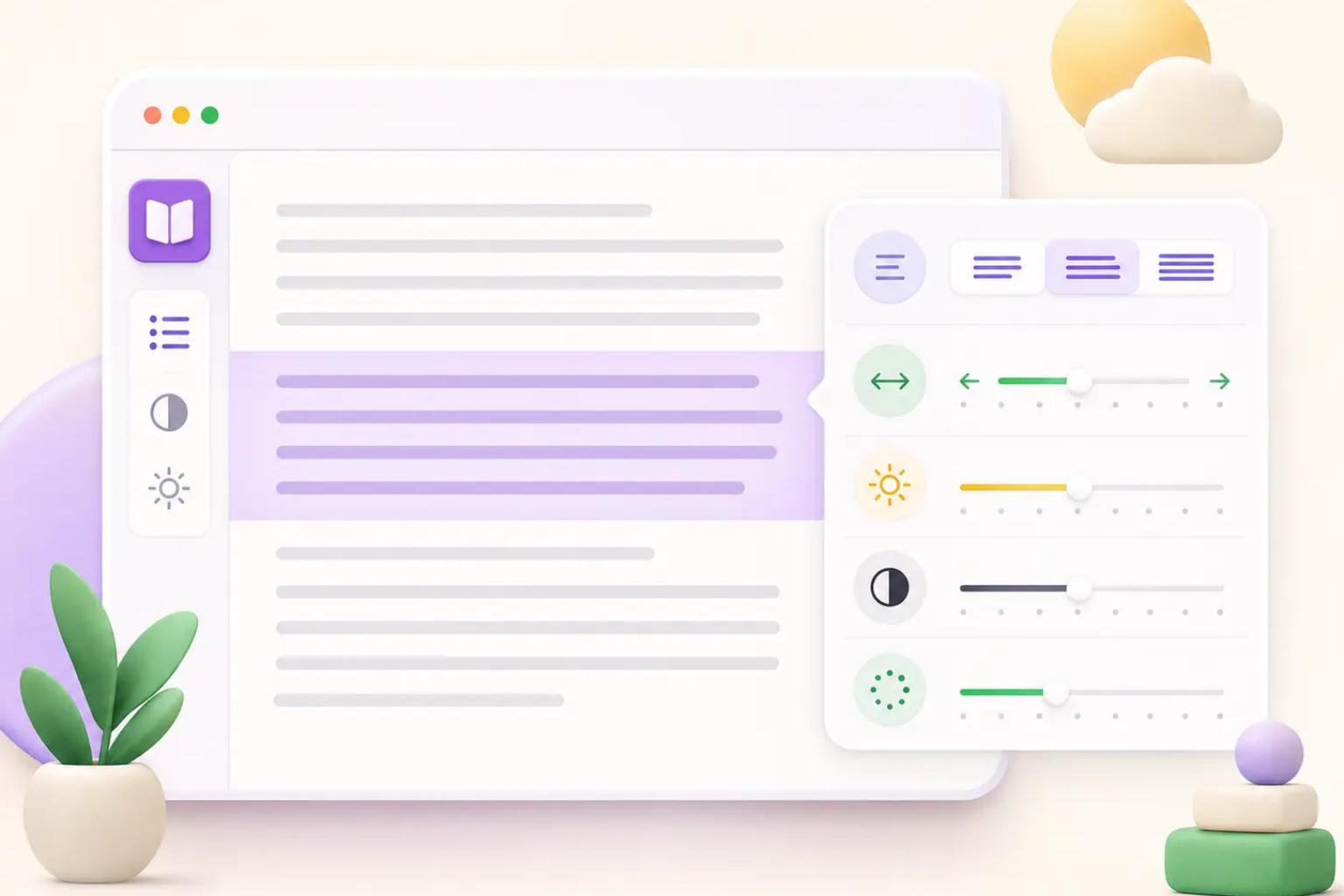
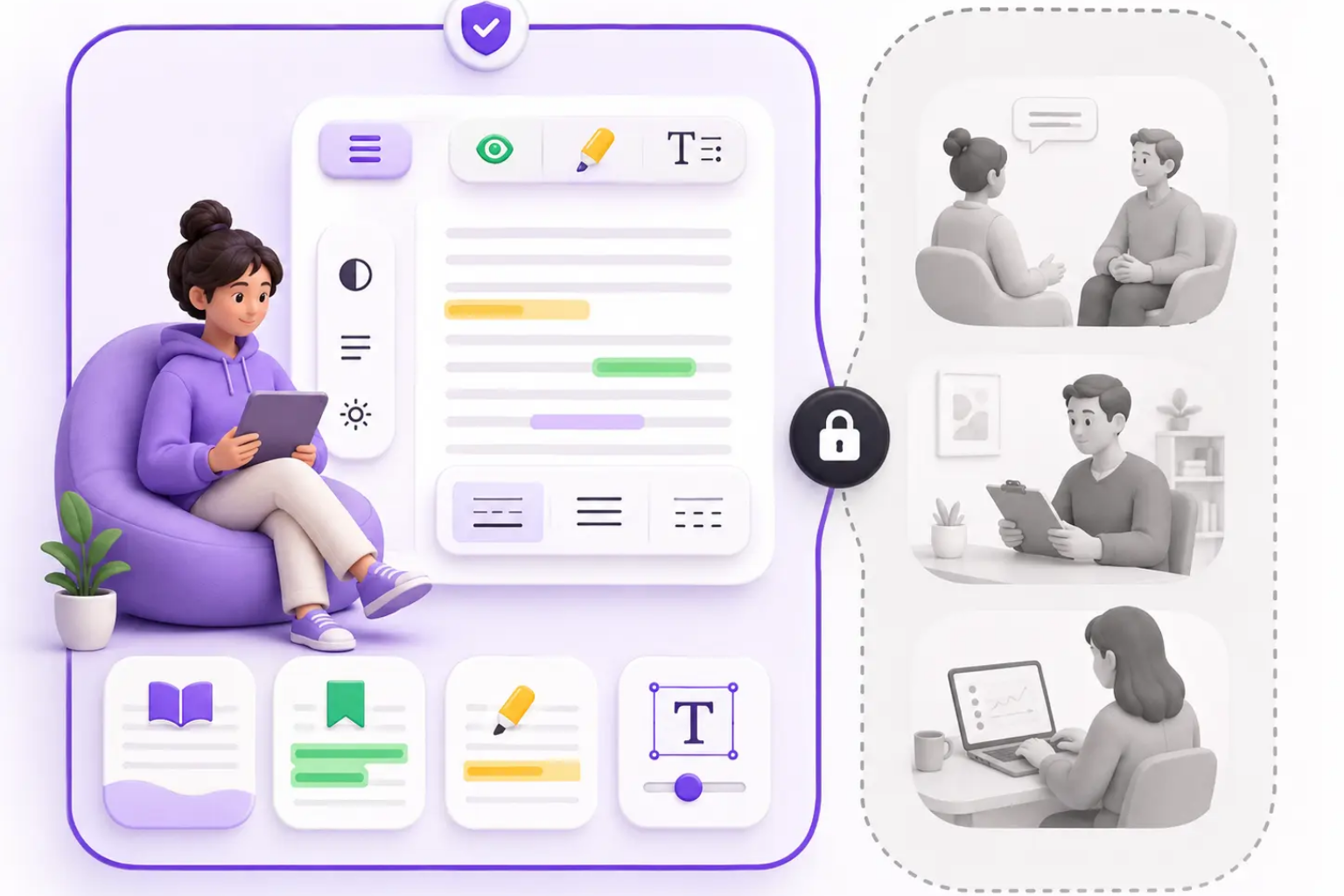
An ADHD reading tool comparison should look beyond feature lists and ask whether a tool helps readers start, stay oriented, restart, and protect private text.
How to compare ADHD reading tools
An ADHD reading tool comparison should begin with the reader’s actual failure point. Some people lose their place. Some reread the same paragraph. Some avoid starting because the page looks endless. Some understand short articles but struggle with research papers, policy pages, school portals, or long emails. A useful ADHD reading tool comparison maps features to those moments instead of simply counting toggles.
The first question in an ADHD reading tool comparison is whether the tool reduces startup friction, because an ADHD reading tool comparison should reward fast starts. A good tool should make the first action obvious: choose a purpose, preview a page, turn on a preset, or start a short loop. If the tool requires too many choices before reading begins, it may increase friction for ADHD readers even if it has impressive settings.
The second ADHD reading tool comparison question is whether the tool supports recovery. Attention will break. An ADHD reading tool comparison should value features that make it easy to return: focus overlays, line comfort, site memory, checkpoints, reading stats, and clear reset controls. The goal is not perfect focus. The goal is a reading environment that makes restarting less costly.
Startup friction
Focus recovery
Readable defaults
Clear reset controls
Bionic reading tools vs full reading systems
A common ADHD reading tool comparison starts with bionic reading tools, but an ADHD reading tool comparison should not stop there. Bionic reading can add word-start emphasis that gives the eye stronger anchors. For some readers, that makes scanning easier and reduces the feeling of a flat wall of text. But bionic reading alone does not explain difficult ideas, remove sidebars, create a reading goal, or help a reader remember what they learned.
In an ADHD reading tool comparison, a broader reading system combines bionic cues with semantic highlights, typography controls, focus overlays, reading timers, checkpoints, and privacy controls. In an ADHD reading tool comparison, bionic reading is best understood as one layer. It helps visual movement. Other layers help attention, comfort, structure, and memory.
ADHD Reading is designed around that layered approach. In an ADHD reading tool comparison, the product direction is not just to make words look different. The goal is to help readers move from before-reading planning to during-reading focus and after-reading recall. That is the difference between a formatting tool and a reading workflow.
Bionic cues
Semantic meaning
Focus overlays
Reading workflows
Reader modes and distraction blockers
Another ADHD reading tool comparison category is reader mode, and this ADHD reading tool comparison category matters for cluttered pages. Reader modes can remove sidebars, ads, comments, navigation, and clutter. This can be powerful in an ADHD reading tool comparison for ADHD readers because visual clutter constantly creates escape routes. A clean page can make reading feel safer and more finite.
Reader mode has limits, so an ADHD reading tool comparison should check compatibility. Some pages break when layout is simplified. Interactive documentation, dashboards, portals, and apps may need original structure. A good ADHD reading tool comparison should ask whether the tool can reduce distractions without destroying the page. Soft de-emphasis can sometimes be safer than aggressive extraction.
ADHD Reading uses a clean reader mode direction that visually reduces common distracting regions while keeping the page recoverable. It should always be easy to turn off. Any ADHD reading tool comparison should reward tools that provide a panic-off path, because users need confidence that they can return to the original page.
Reduce clutter
Avoid breaking pages
Soft de-emphasis
Panic-off shortcut
Highlighters, note tools, and checkpoints
A simple highlighter can be useful, but an ADHD reading tool comparison should check whether highlights create recall and what happens after the highlight. Highlighting without a reason can create a second wall of marked text. A better workflow asks the reader to connect marks to a purpose: this is a definition, this supports my argument, this is confusing, or this becomes an action item.
Checkpoint notes are often more useful than endless highlights in an ADHD reading tool comparison. After a short loop, the reader writes one sentence about what changed in their understanding. This makes the next session easier to restart. In an ADHD reading tool comparison, note features should be judged by whether they reduce rereading and support recall, not by how many colors they offer.
Future ADHD Reading workflows can support saved takeaways, exports, and revisit queues. The immediate ADHD reading tool comparison point is simpler: does the tool help the reader leave one useful trace after each reading loop? If yes, it supports understanding. If no, it may only decorate the page.
Purposeful highlights
Checkpoint notes
Reduce rereading
Support recall
Privacy in an ADHD reading tool comparison
Privacy should be central in any ADHD reading tool comparison, and an ADHD reading tool comparison should treat privacy as a feature because reading tools may see sensitive text. Users might open school records, workplace documents, health pages, legal information, private emails, financial articles, or personal writing. A tool that improves readability should not quietly turn private reading into remote data.
A privacy-aware ADHD reading tool comparison should ask five questions: does routine formatting happen locally, what permissions are requested, what settings are stored, is full page text uploaded, and can the user delete local data? If a tool offers AI summaries, the comparison should ask whether uploads are optional and clearly explained.
ADHD Reading is built around a local-first direction. Routine reading support should happen in the browser, support requests can go to support@adhd-reading.com, and users should avoid sending confidential page text. A serious ADHD reading tool comparison should treat privacy as a product feature, not just a policy link.
Local-first processing
Clear permissions
Delete local data
Optional AI only
What to choose for your reading situation
The best ADHD reading tool comparison ends with situations, because an ADHD reading tool comparison should help users choose by problem. If you mainly lose your place, prioritize bionic cues, line height, and focus overlays. If you mainly avoid starting, prioritize a reading checklist, short timer, and preset modes. If clutter is the problem, prioritize clean reader mode. If memory is the problem, prioritize checkpoints and notes.
Students should compare tools by how well they support assignments: purpose, preview, quote capture, and restart markers. Knowledge workers should compare tools by long-email support, documentation reading, action extraction, and privacy. Everyday readers should compare tools by comfort, low-friction setup, and the ability to turn features off quickly.
ADHD Reading aims to combine these needs into one local-first reading system. The product is not medical treatment and does not diagnose ADHD. It is a practical reading environment for people who want calmer pages, clearer next steps, and better recovery when attention breaks.
Students
Knowledge workers
Everyday readers
Privacy-sensitive readers
Frequently asked questions
ADHD Reading Tool Comparison FAQ
What matters most in an ADHD reading tool comparison?
Match tool features to the reader's failure point: startup friction, lost place, rereading, clutter, memory, or privacy.
Is bionic reading enough?
Bionic reading may help visual movement, but many readers also need focus overlays, typography controls, checkpoints, and privacy controls.
Should privacy affect tool choice?
Yes. Reading tools may interact with sensitive text, so local-first processing and clear permissions should be major comparison criteria.
Is ADHD Reading a medical tool?
No. ADHD Reading is an assistive reading and productivity product for people who want to read long articles with ADHD; it is not diagnosis, treatment, or medical advice.